Project Auto Launch – Test Flight 5 – 07/03/10

Another successful test flight of the MkII, the main purpose of this and the next few test flights will be monitoring the reliability of EMMA and the on board hardware.

It is becoming more difficult to find days with good flying conditions for the smaller MkII aircraft. We can’t wait to get the MkIII up in the air; with its size, controlling it’s flight should be much easier.

Project Auto Launch – Meeting – 28/02/10

Today we had a meeting to discuss the details of how we will progress with the MkIII and how to include our newest members into WARP, to make the most of their talents.

Project Auto Launch – Test Flight 4 – 21/02/10

Mark 2

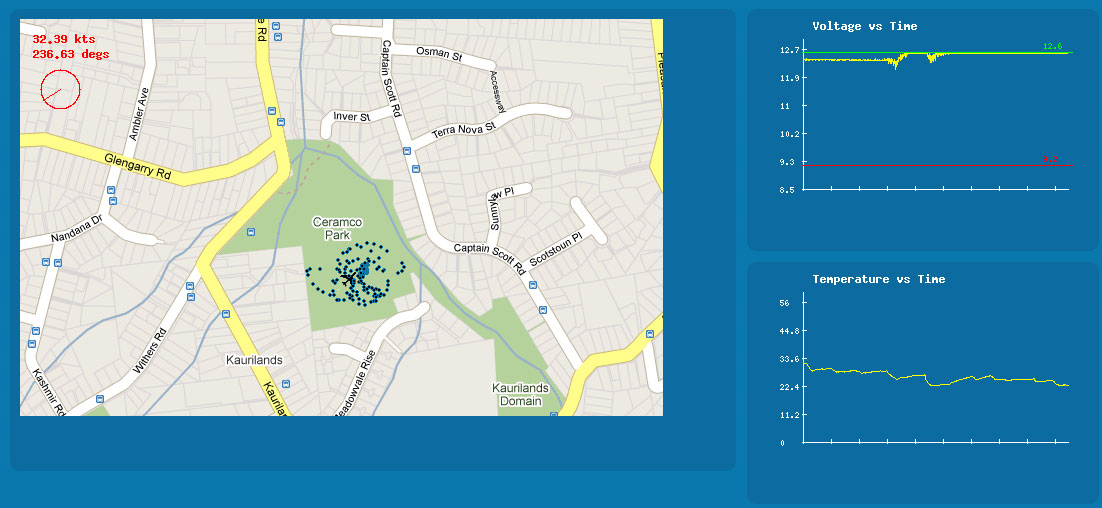
On our forth test flight of the Mark II plane we used the ground station interface from Project EMMA to produce real time GPS coordinates on Google Maps and graphs of voltage, temperature and speed. The data was recorded for over 30 minutes of flying on a particularly windy day which tested Sam’s flying skills.

temperature graph


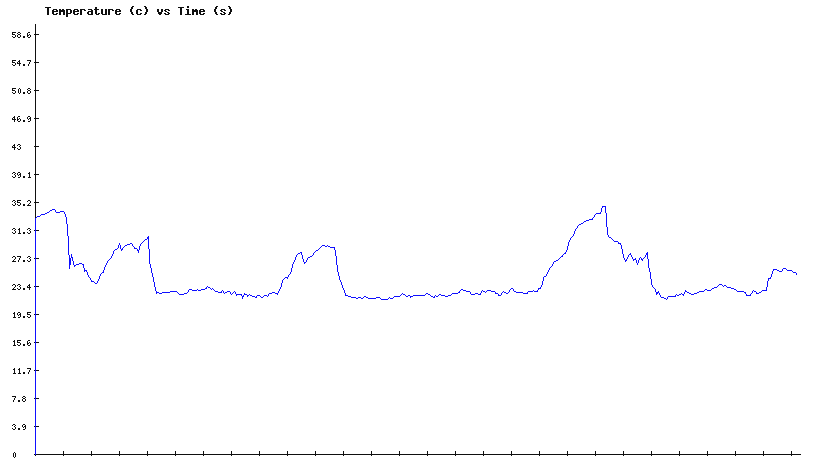
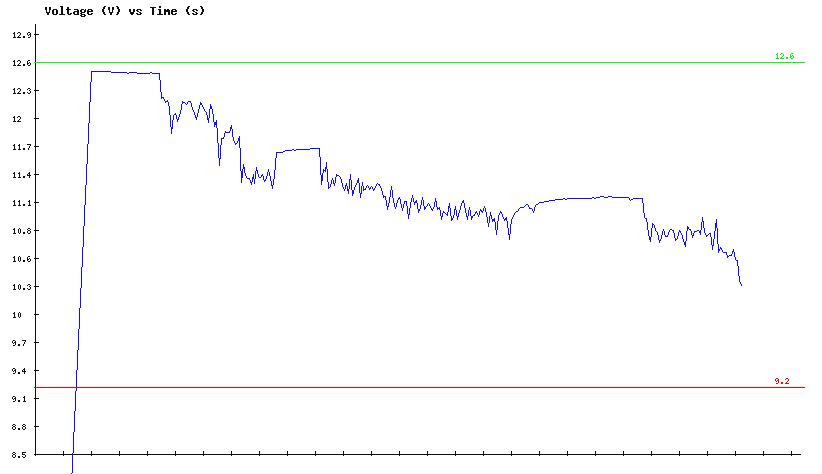
We were able to get a good idea of the battery life. The Voltage dropped from 12.5V to 9.8V over 35 minutes (the minimum voltage is 9.1V). The plane reached a maximum speed of 82 km/h travelling downwind, and we recorded an interesting temperature profile. A constant temperature of around 22 degrees while flying at an altitude between 20m and 50m is seen, while on the ground we measure about 31 degrees. Check out the graphs to the left.

voltage graph


We attained minor damage to the hull due to the plane being hand launched but this is easily fixed. A problem also occurred with the EMMA web interface crashing at the 20min mark, meaning we could no longer see the map and graphs. Thankfully the data was still being logged. We suspect this problem was caused by the page displaying and processing too much information from the database or possibly a caching problem with Google Chrome. Regardless, we still gained a lot of useful data and the next flight is sure to be much more streamed-lined.

emma


We now aim to start programming the auto pilot system. Check the forum pages for information on the specific hardware and software we plan to use.

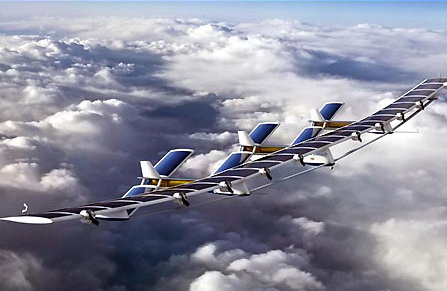
MARK III Update: Construction of the next prototype plane is still being planned with specific building materials being the main focus of discussion. Every test flight of the Mark II and tests of the electronic systems brings us closer. The Mark III will be much larger, controlled by autopilot and reach an altitude of 10km with a 5kg payload.


Project EMMA Interface – 20/02/10

emma

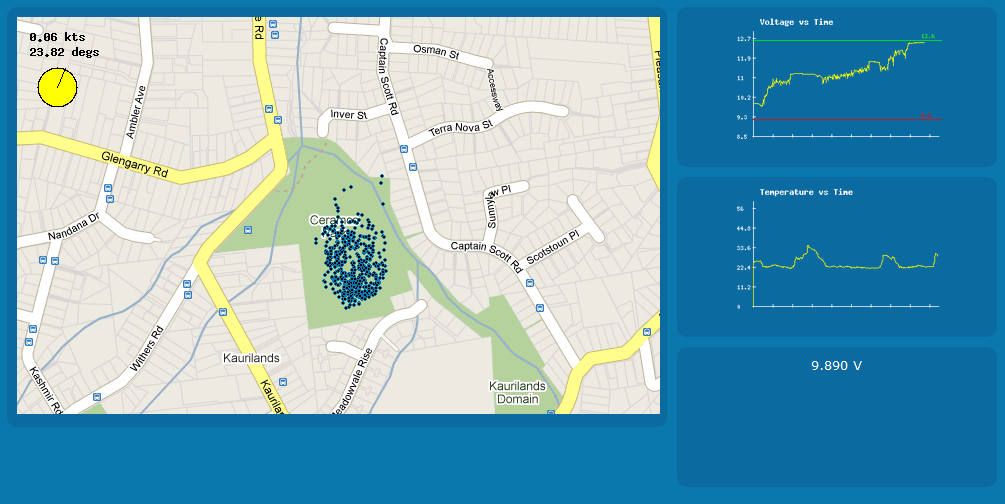
Here it is! On this screenshot we have plotted the data taken from the recent test flight of the Mark II. The dots on the map show the position of the plane every second and the graphs on the side are taken from the voltage and temperature sensors on board.

It was too windy for a test flight today but we will try and take out the Mark II tomorrow to test the interface. Tomorrow we will also be having a company meeting so expect another update soon.

Busy Weekend – Project EMMA Update – 20/02/10

emma

We have been busy the ground station interface for Project Auto Launch – Mark II and like many coding jobs, much time has been spent on a few small and annoying issues. We will unveil the new interface shortly. This will give us real time data analysis while the Mark II plane is in the air regarding the voltage of the battery, air temperature and the GPS position plotted onto Google Maps. The software uses a web interface coded in PHP and we will be running it off an ASUS Eee PC.

The interface is part of the overall structure of Project EMMA, the software architecture used for all of our projects and that we will one day use in a larger ship to control ship systems, sensors and data. As we create new ways to handle sensor data and perform calculations we contribute to the growth and evolution of Project EMMA.

We are looking for keen programmers to help us add to Project EMMA for our various projects. If that sounds like you please email us or drop by the forums. Suggestions or ideas on the programming language and GUI are welcome.

Tristan

Project Auto Launch – Test Flight 3 – 06/02/10

Mark 2


This is our latest successful test flight with the GPS, temperature and voltage data being sent to the ground station. We will post the analysis shortly. We found that the wheels are not suitable for taking off and landing on the grass field so we had to resort to hand launches and catches.

Next test flight is the 20th of February 2010. This will test the new ground station software plotting the GPS position in a map in real time as well as graphs of temperature and battery voltage.

New Electronic Speed Controller (ESC) – 28/01/10

emma

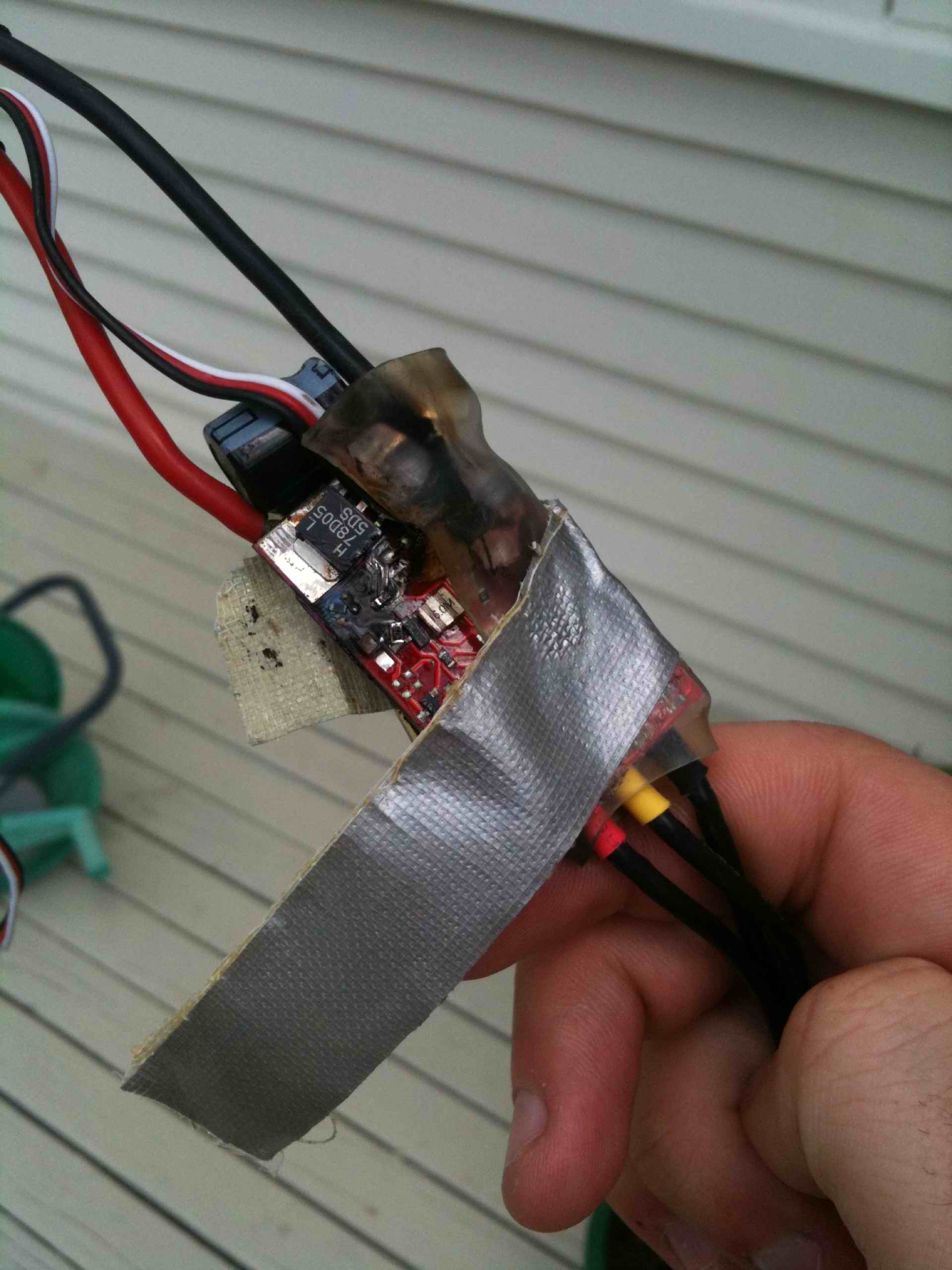
Since the last ESC caught fire because it couldn’t handle the current we were drawing, we upgraded to an 80amp version. The ESC is a small circuit which controls power from the battery to the motor and also the servos and receiver. We found one at a hobby shop for $160 NZD and it seems to be working fine with our 3x cell lithium polymer battery. However we noticed that the throttle has become much more sensitive. Even the smallest touch seems like it pushes the propeller another few thousand rpm. We are a bit worried now that if we go full throttle, the draw on the battery could be too large and may cause it to explode. This can also happen if the voltage on the battery drops below 9V (fully charged is 12.6V). Hopefully our tests in the next couple of days will be successful!

We also found a better way to mount the internal electronics in the nose cone. The GPS and temperature sensor now sit on the top of the nose cone. It doesn’t look pretty but if the transmitter functions correctly and the electronics remain stable we can then adapt the autopilot system and move further towards Mark III.

If the weather is good, the next test flight will take place on Saturday the 6th of February at Ceramco Park in West Auckland. I will add more details closer to the time.

Tristan

Project Auto Launch – Mark III Prototype – 21/01/10

data


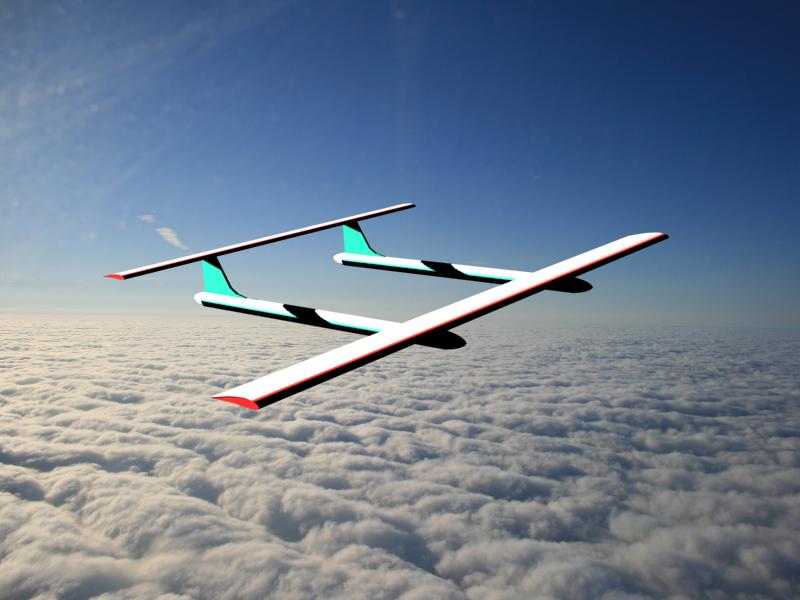
We are ready to start simulating and building the Mark III prototype (see image). The prototype is designed to have an attached payload which will detach and launch itself mid-flight. We are first modelling the aircraft in 3D Studio Max and then running various aerodynamic simulations using GERRIS and X-Plane.

Project Auto Launch Mark II Test Flight – 11/01/10

Transmitter Range Test

data


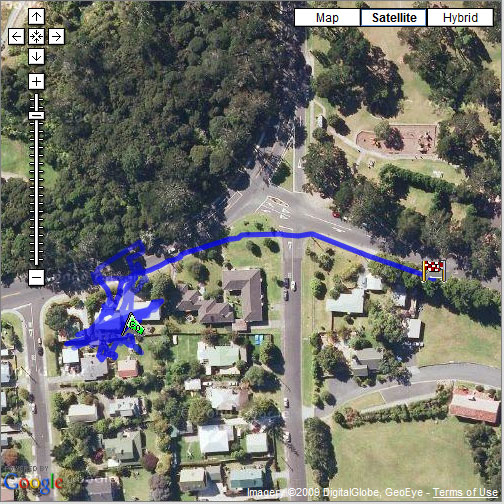
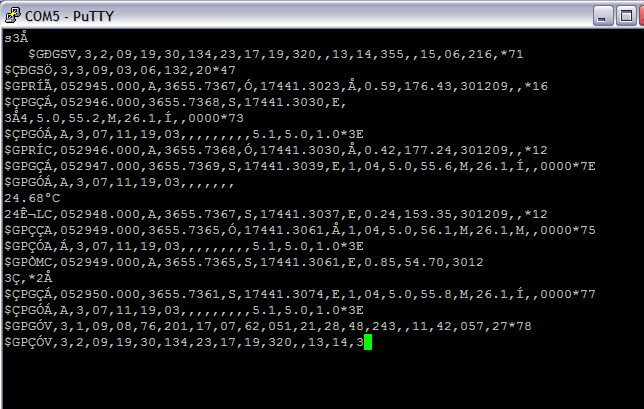
The first range test was done with the XBEE Modules sending GPS and Temperature data. At ground level through 4 houses and multiple trees, it was able to communicate at a range of 160m. Click on the image to see the path. We anticipate we should at least get a kilometer line of site when flying.

Project Auto Launch Update

data


We have finally completed the wireless link between the PAL Mark II and the ground station. The XBEE modules along with the Arduino board were difficult to program and setup and this has stalled progress on the project for the past few months. Now we have successfully transmitted GPS and temperature data from a sensor and can now attach it to the plane. The next test flight is imminent. Check the projects page for more details and photos.

Synapse on Facebook

data


Synapse is on Facebook!

Join the group here, and stay tuned for announcements of the 2010 dates for the Physics lecture series.